
 Photos from Stonehenge Collectables
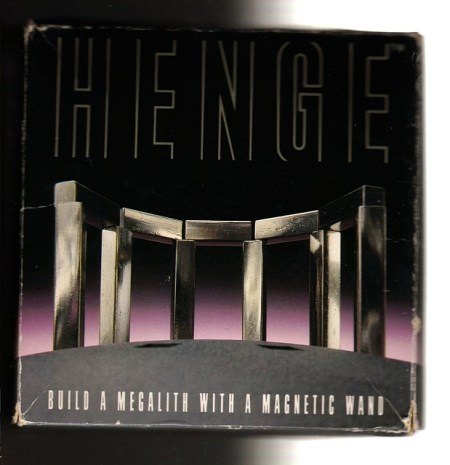
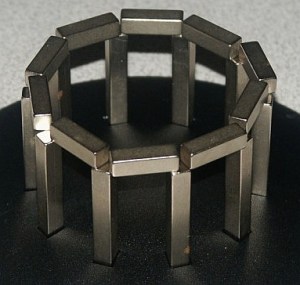
For this post we present a couple examples of boxed build-your-own henge sets. The first is called, simply, Henge, and it says it is “a game of sculpture and skill based on prehistoric Stonehenge. The aim is to create a circle or henge of steel blocks using a magnetic wand.”
It appears to be a handsome thing and the object, apparently, is to create the equivalent of the complete outer circle of Stonehenge by manipulating those steel bars with that magnetic wand.
The lingering question, of course, is: Then what? But with two sets, of course, you could begin to do something a little more accurate. Please note, it says “Made in England” and then, “Nashville, Tennessee.” This is an intriguing item and we would be curious to see one in the hard copy world.
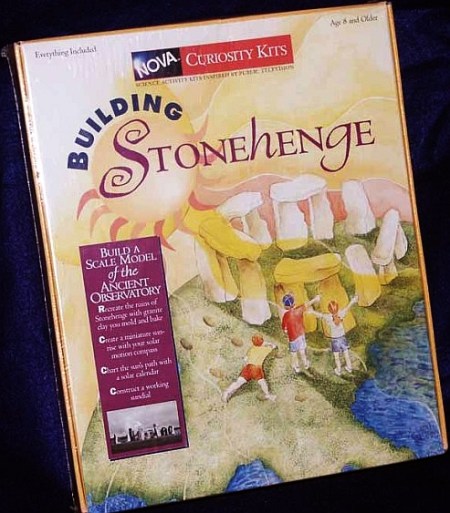
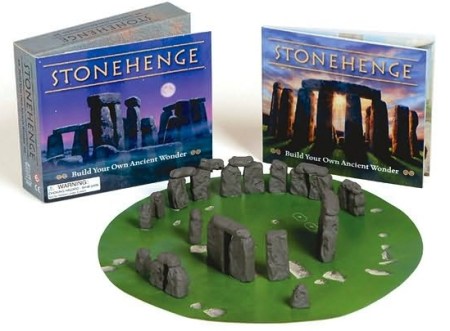
The other item here is a more complex educational set made for children. The copy reads, “Create a miniature sunrise with your solar motion compass and chart the stars path with a solar calendar and working sundial.
Materials: Granite clay, printed Stonehenge base plate, solar motion compass, sundial-solar calendar, glue and brush, and an illustrated instruction poster, home oven and flashlight repaired. ” (Perhaps they meant required?)
We don’t know whether this one includes info on the bluestones and the ins and outs of the outer circle, the heel stone, the “altar stone,” the ditch and bank, etc., but a dedicated person could do the research and include all of that (even add some aliens or a Buddha if they wanted!). This seems like a fun thing to play and learn and be creative with. “Chart the sun’s path with a solar calendar.”
Either of these could give an adult and a child a fun day thinking about Stonehenge, its form, its possible functions, and who built it. With the first, you could also talk about magnetism. With the other, you could also talk about astronomy. And with either, a creative person could take it further. Score for the first, 4 druids. For the second, 5½ druids.
These are just two examples of hands-on model sets generated by Stonehenge one way or another. That mysterious urge to re-create it comes through in every form and size, with many new conceptions of the Stonehenge idea yet to emerge. What brings people back to it again and again, recreating the ancient monument in ever newer ways, no two alike? We like to think that this collection we’ve created here at Clonehenge may help to bring us closer to an answer.
If not, at least it brings us to another, equally important question: Aren’t people, well, a little weird? Just sayin’.
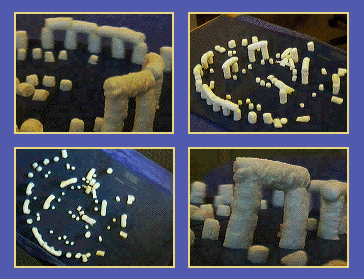
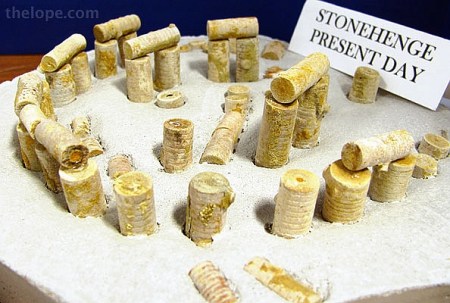
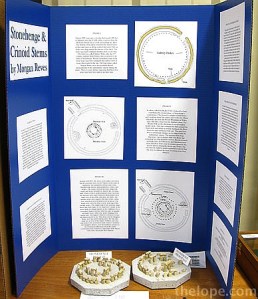 As you can see on the left, diagrams and explanations of Stonehenge, and possibly of fossil crinoid stems, accompanied the models. Was this a science fair project or some other kind of display? We can only speculate, but we’re glad it was there to add to the weird materials list for Stonehenge replicas!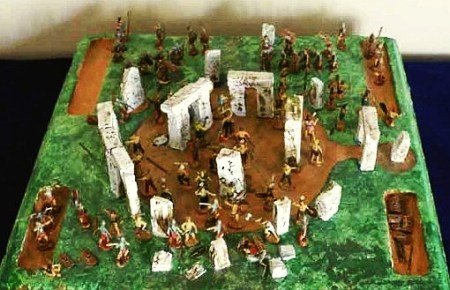
 photos from
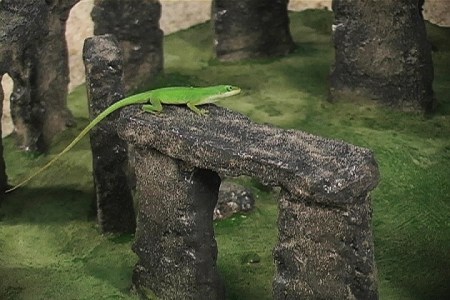
 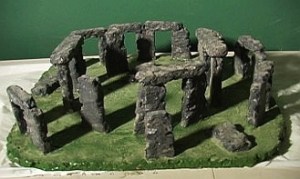 As sometimes happens, we started out chuckling when we first stumbled across this (Stonehenge for your lizard? Rly?), but upon closer examination, we were impressed. He looked at Stonehenge. Carefully. He says the word sarsen, and would have said trilithon if he’d known the word. He was reaching for it, but could only come up with “Stonehenge structures.” The point is, he noticed. Well done, sir!
 photos by
  The replica at the top of this post, seen in glass on top of the cabinet, is one of the cork models by Henry Browne,
 photo from the
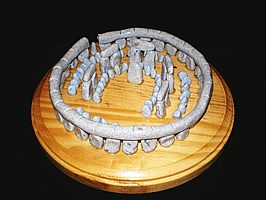 They offer them at a modest price. Each is about 8 inches across.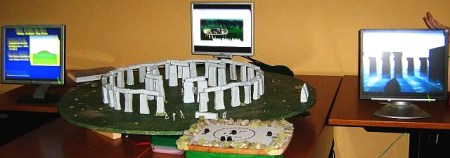
 This made us think it would be great to set up computer monitors in a circle with a nice Stonehenge model in the middle, and have them all showing Stonehenge, constantly rotating. But back to the study, the conclusion arrived at here was that people are impatient and easily distracted, and, extrapolating, it’s difficult to teach us anything. Duh!
 CLONEHENGE