

photo and mini-replica from dewgardencrafts on Etsy, with permission
It’s like a little herd of Stonehenge on a hill! You can almost imagine tiny mysterious druids that only come out when you’re not around and put up megaliths. Awesome! This item threatens the Taipei Stonehenge sculpture‘s claim to the Cutest Stonehenge title.
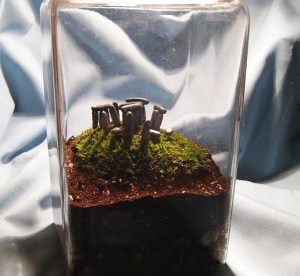 The terrarium in the photo above, sadly, has been sold. The one to the left, however, is still for sale on Etsy, “the place to buy and sell things handmade”, as are others, including the less poetic but intriguingly-named Butt Crack Terrarium . . . Oops! We’re too easily distracted. Let’s stick with Stonehenge replicas and let others blog the butt cracks!
These mossy models are in some ways preferable to many of the more complete and accurate small replicas. The moss implies the charm of the landscape, the essential Stonehenge factor so often overlooked by replica makers, especially those on the left side of the Atlantic. As much as it has been co-opted by astronomers, Stonehenge wasn’t just about the sky–at least that’s our opinion, if we’re allowed one.
And now we have some scoring to do. Score: 6 druids. It may not be accurate, but gosh darn it, we like it, and we can do whatever we want. It’s our blog!

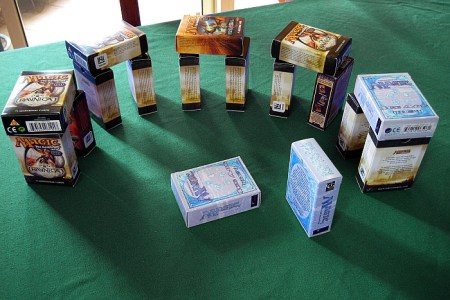
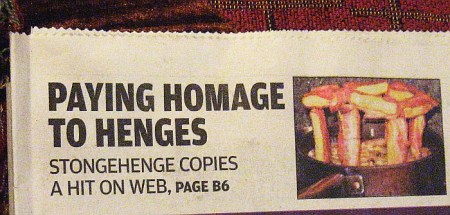
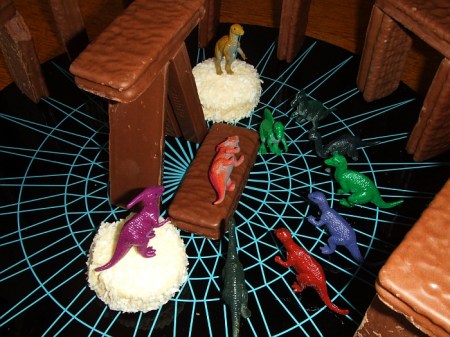
 She calls the above photo a bloody sacrifice (as in the PeepHenge photo* we mentioned before). It is clear to the practised eye, however, that we’re looking at a healing, in keeping with the new thought about Stonehenge’s purpose as a sort of lithic Lourdes.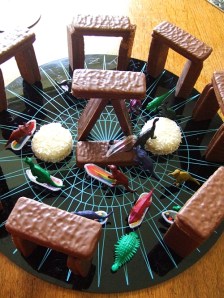
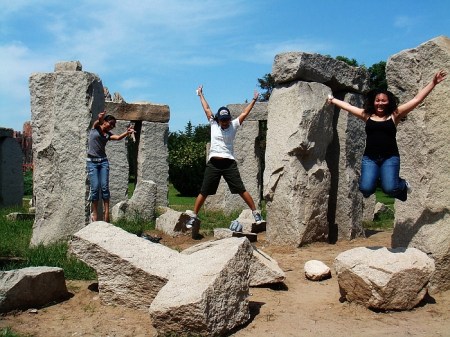
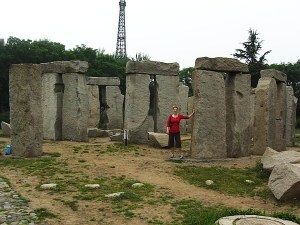 The exciting thing is that you can see the Eiffel Tower behind it. The stones, however, do not have the lichen-like patina we were so impressed with in Shenzhen, and they are squarish. As usual in these cases, no attempt at bluestones or other details of the original. Score: 7 druids. We’re starting to think we should organise Stonehenge tours of Asia!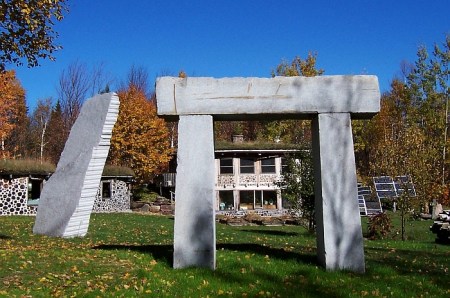
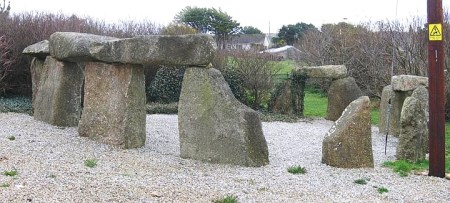
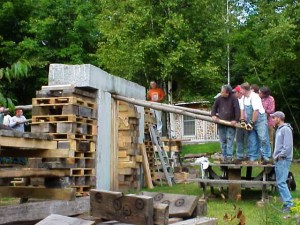 The uprights had been erected and deeply anchored in previous years, so at the International Megalithic Conference in August 2007, the job was to top them with the lintel. Two different methods were used in an effort to compare them, as is described on the page linked above. This is how to
 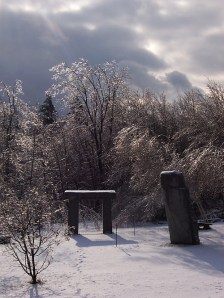 The result is outstanding. What a great thing to have in one’s garden! We might wish the stones were more naturally-shaped so that it resembled Stonehenge more and a

 CLONEHENGE