

photo by MG/BS4, with permission
Admittedly this is a little late, as the article we got it from was posted in June. It got by us at the time but a friend of the blog sent us a link, so here it is, another toilethenge by Banksy, this time part of the exhibit Banksy vs. Bristol Museum.
Not sure why he went for this again. His Glastonbury replica was sufficiently satisfying, and the guerrilla art pinballhenge that may or may not be his struck us as a little fresher. If you know what we mean.
Written on the Welcome to the Museum sign are the words, “Now wash your hands,” which would actually be funnier if they were on a sign on the way out that said “Thank you for visiting the museum.”
Long time readers will remember that this is not our first Bristol henge. Rogue archaeologists at the uni there built a snowhenge during the great snow last winter. We’ll be keeping an eye on that city from now on.
Score: 5½ druids this time. This is smaller and less elaborate than last time, just one trilithon and a fallen upright, and it feels a little tired. You never know with Banksy, of course–that may be what he’s going for. He certainly is not worried about his score on Clonehenge. We confess we’re fans and we look forward to whatever he comes up with next, henge or no henge!
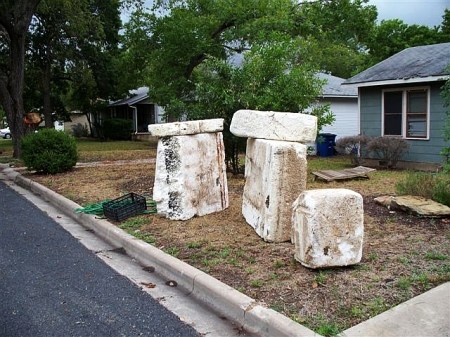 Photo copyright, Joseph R. Jarrett September 11, 2009 “Foamhenge – Austin, Texas”

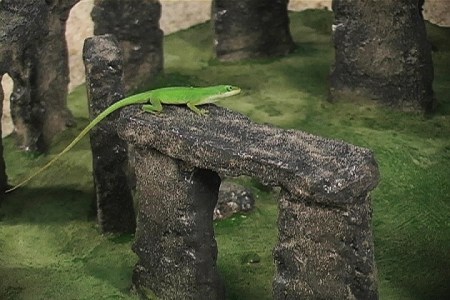 photos from
 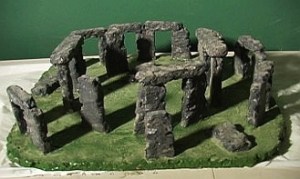 As sometimes happens, we started out chuckling when we first stumbled across this (Stonehenge for your lizard? Rly?), but upon closer examination, we were impressed. He looked at Stonehenge. Carefully. He says the word sarsen, and would have said trilithon if he’d known the word. He was reaching for it, but could only come up with “Stonehenge structures.” The point is, he noticed. Well done, sir!
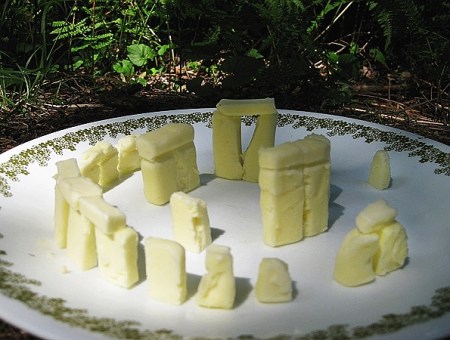 photo and henge by Dave and Janet Burt, with permission
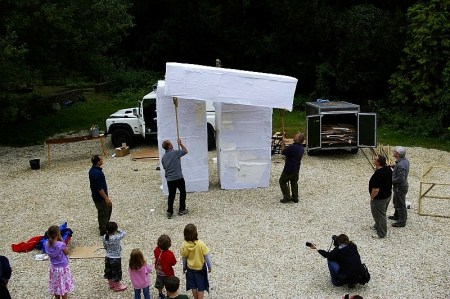 photos by
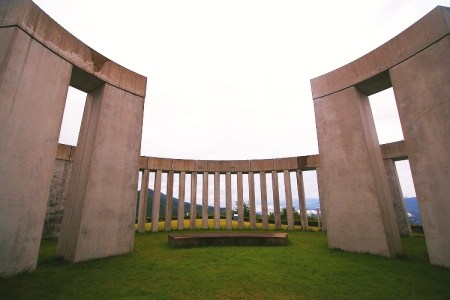 photo by Hatsuki NISHIO, with permission
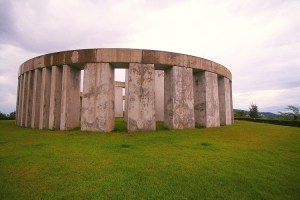 The replica itself is interesting, as astronomy-oriented ones often are. The bluestones are missing, and the uprights around the outside vary greatly in width, being very narrow and close together in some sections of the circle, as you can see above, while others are more similar in proportion to those in the original. The curve of the lintels in the inner trilithons is also noteworthy.
 CLONEHENGE