The BBC Inflatable Trilithon–Bring on the Helium!

photo by Thelma June Jackson, used with permission.

Is it just us, or has there been a surge of Stonehenge-related news (ish?) lately? Of course when it comes to this obscure topic, it IS just us: Stonehenge-Replicas-R-Us! (Which it happens is the name of our new retail outlet, still in development… Okay, then, very early stages of development… Oh, all right, we just then made it up. Happy? Now stop interrupting!)

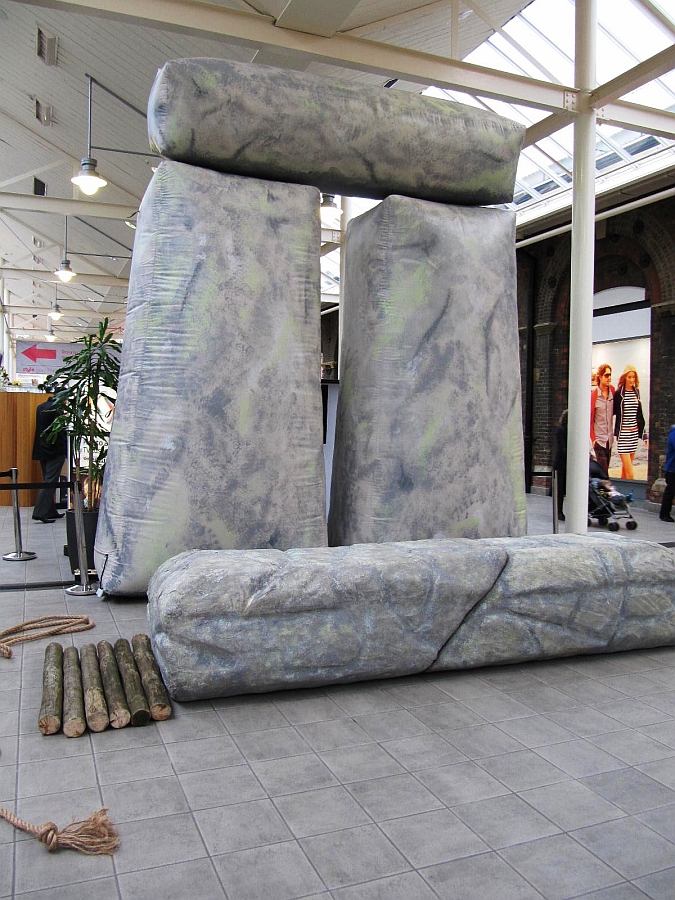
Anyway, this is the first, and the most earthshaking, of a few posts for which we have been forced to come out of retirement, which, we find, is much less restful than one might think anyway. We present to you, Gentle Readers, the fabled inflatable Stonehenge! It’s only a trilithon, but with the way Stonehenge has been reproducing around the world, a full Stonehenge is only a matter of time. Just lock this trilithon in a room with one of Spinal Tap’s inflatable touring trilithons and in no time there will be little inflatable Stonehenges hopping about the fields and meadows, looking adorable while American and Japanese tourists snap away on their cameras! Exciting.

Until then, this remarkable construction is being hauled around Great Britain–well, minus Scotland and Cornwall–as part of the BBC’s Hands on History tour, The Secrets of Stonehenge, for half term break.  Brilliantly, people have been kind enough to take pictures the same way they might for someone who had a legitimate worthwhile blog, but for us instead!
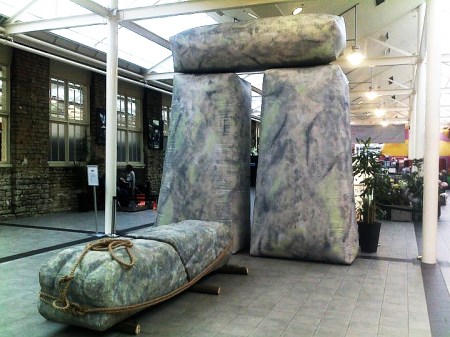
photo by the Wiltshire Heritage Museum, used with permission

Note how the “logs” in the top picture are being used to roll the fourth “stone” in the second picture. Children and presumably some adults* are permitted to try their hands at moving an inflatable megalith. Fun!

Of course, the real stones at Stonehenge are not light weight inflatables, but are huge, enormously heavy rocks. We don’t actually know that they aren’t hollowed out, though. Some, in fact, suggest that they’re filled with a very advanced sort of clockwork for which the Antikythera mechanism was just a mock-up, and that on December 21, 2012, a huge stone clown’s head will leap out of the ground in the center of the circle while the stones play, “Pop goes the weasel!” Frankly, it’s no loonier than much of what we hear said about Stonehenge, so who knows?

After all that blithering nonsense we come to the score. The thing these inflatables have going for them is that they are close to full size. Adds a full point. Some trouble has been taken to make them look rough and uneven. They are educational and can be touched by children… We award these trilithons 6½ druids! That is possibly the highest score we have ever given t0 a mere trilithon!(Meaning we can’t be arsed to check.)

The illusive inflatable Stonehenge finally appears on Clonehenge. We’ll post one again when it’s listed in next year’s Ann Summers catalogue. Finally inflatables will make it possible to live two great fantasies at once. Humph. And people say the future isn’t bright!

*Those who, unlike one adult we won’t name (but who rhymes with Feet Crastonbury), could be trusted to approach the inflatables without attempting to pop them.

NEWSFLASH!! As of April 19, 2012, the inflatable Stonehenge dream has been even more fully realised! Click here for our post on Jeremy Deller’s inflatable bouncy Stonehenge. Humbling to see mankind reach its highest purpose in our lifetimes, is it not?
Update on Esperance–Australia’s Pink Stonehenge Going Forward!

Photo from the Esperance Express.

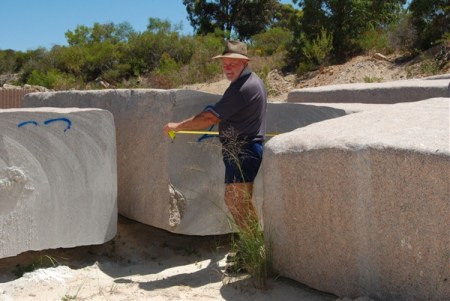
This is an update to our post (Stonehenge Recycled, Australia Tries Again) on the proposed Stonehenge replica in Esperance, a town on the south coast of Australia. (Claim to fame? When pieces of Skylab fell there in 1979, the town of Esperance charged the United States for littering.) Our thanks to friend of the blog Matt Penny, aka @salisbury_matt,  once again, for sending us the link to this article.

It doesn’t sound as if any stones have yet been erected, but the article does say, “According to Mr Beale the site has been soil-tested and initial works have begun in working out where the stones will go. It is hoped the project will be finished late March to early April.” So plans to erect the stones must be in place. Right? We hope.

Of course there appear to be worries about pagans worshiping there (Oh, no, Trev, someone is honouring the earth again! Can’t have that, Nige!), as if pagans will only worship in your area if you build a Stonehenge for them. But the couple doing the building reassures the locals that Stonehenge may not have been a pagan place of worship at all (Whew!), so all is well.

For us, the good news is simply that the project seems to be going forward. Esperance will soon be home to “the world’s only life-size granite replica of Stonehenge.” (Apparently they don’t consider Rothberg’s Circle of Life in Connecticut a true Stonehenge replica, which is kind of true.) We are eager to welcome number 67 to our list of large permanent replicas! Just hopethey don’t charge the U.K. for littering!

Post script: Esperance, Australia is also famous among “a-flock-alypse” followers as the site of at least two mass bird deaths a few years ago. Many people believe the deaths had to do with high lead levels, while others insist the cause is still not known.

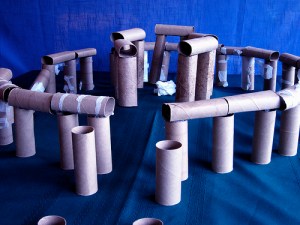
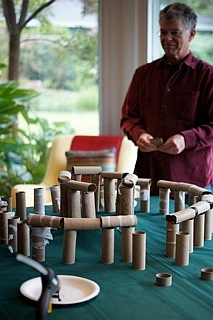
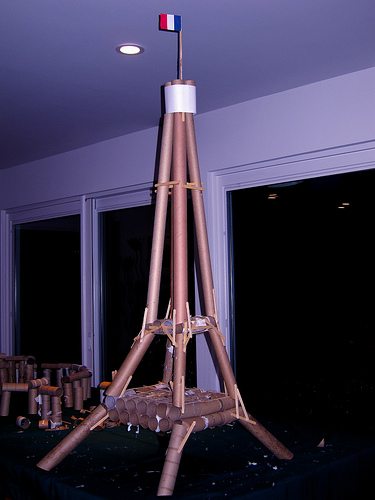
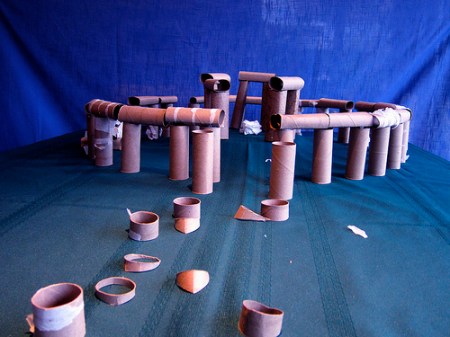
Bog Roll Tube Henge, aka Toilet Paper Tube Henge

Photos provided by Simon Burrow, henger and hengeophile extraordinaire.

The key to henging fame is not necessarily to do something first, but to do it better than those who came before. Simon Burrow has taken the second route to henging greatness with Toilet Paper Tube Henge 2010. He writes (in his blog, here): “Kimberly Clark’s announcement that the toilet paper tube was an endangered species inspired this tribute.”

That’s right–the paper products company is pioneering the tubeless paper roll. So if you want to build your own bog or toilet paper roll henge, you’d best do it soon! We doubt, however, that you will surpass this thoughtful and detailed construction. Mr. Burrows has been doing henges for a long time and has hit just the right balance between thoughtful and silly.

Note the higher inner trilithons and the scattered loose “stones” in what we assume is the direction of the rising sun. We admire the rough look attained by leaving bits of paper that adhered to some of the tubes. There are inaccuracies but we assume the master artist left them in so as not to be too literal. Score? We award it 6½ druids!

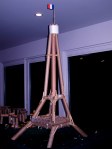
And then there is the matter of the item he has labeled the “Awful Tower.” Hmmm . . . there must be a blog for those, too. How will mankind go on when these versatile materials are no longer available? What will happen to our souls when they are no longer enlivened by creations like this???!!!! But alas! That day hastes toward us like a flock of dead birds hastes toward the pavements of Arkansas.

For similar henges, see the slide show on the MySpace page of Captain Henge, the Bog Roll Mania blog, and . . . dang! we can’t remember where we saw the third, so until we remember, how about a nice soap henge?

We end with a tribute to Mr. Burrow, who has dedicated himself as few have to the continuation and perfection of the henging art. Thank you, sir, for your contributions to the field. We look forward with great eagerness to your next creation!

What will it be, you ask? Here is the last part of the missive containing the announcement of this tube henge:

“Next year Knit Henge! Stay tuned.  Simon”

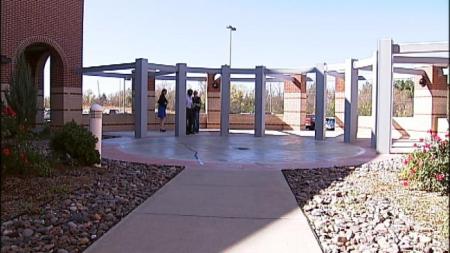
For All You Druids In Tulsa Oklahoma, a Hidden Henge

photo from article in News on 6

Hey, we’re baaaack! Albeit just briefly. Could not ignore this nifty news item sent in by alert and helpful reader Matt Penny, aka @salisbury_matt , still a friend of the blog, Salisbury and Stonehenge enthusiast, and still, as far as we know, perpetrator of the Salisbury and Stonehenge website.

Faculty members at Tulsa Community College’s West Campus have discovered a functioning henge, hidden (as is the method of secret societies like the Illuminati!!1!1!) in plain sight. Henge detector extraordinaire, Earl Goodman, Jr., noticed the suspicious array of posts (see above) and began to plot shadow positions over time. Lo and behold, Voila!, Aha!, and other exclamatory interjections–Mr. Goodman was able to mark out the tracks, or analemmas, showing how the sun’s position moves over the course of the year. Read it here. And here. Although the second link lacks the crucial video–more on that later.

Okay, admittedly we’re being silly here, frankly, in a desperate and pathetic effort to be entertaining, but if we may be serious for a moment, well, we need to put a cape on this guy and a brilliant logo incorporating the letters HD , and send him around the world with the mission of detecting hidden henges everywhere!!! We’re not saying that being stuck in Tulsa for a lifetime is a tragic waste of human life (Why bother? We’re sure others have and will say it.), but let’s face it, someone with this man’s talent could be rooting out henges everywhere, causing education and knowledge to smite people with the suddenness and power of a million lightning bolts!

*Wipes foam from mouth* Ahem. Aaaanyway, we’re pleased to see that so far no one is clamouring to have the whole structure ripped out to save students from pagan influence, as they are at Arlington Texas’s Caelum Moor. The professors are right that this is an excellent learning opportunity and we applaud them.

And now to the extra geeky joy of all this, a special moment in that video at the first link. At around 5 seconds into that video, a henge appears on the screen behind the newsperson. Wait! What is that?! Pause and look . . . that ain’t Stonehenge, people! We used to pride ourselves on being able to name any Stonehenge replica just by looking at a thumbnail, but we’re a little rusty these days. Still, our best guess is that we’re looking at the UK’s Foamhenge, a temporary henge built for a BBC project. It’s possible it’s the Texas Hill Country’s Stonehenge II, but the proportions look wrong. At any rate, we were excited to see another Stonehenge replica involved in the story, even if it’s by mistake.

This is not, as the faithful readers we fantasize about would know, Oklahoma’s first permanent Stonehenge replica. That title goes to the replica at Stonehenge Realty in Stillwater, Oklahoma. These south central states certainly have their hidden corners. Oklahoma and Texas together now have 6 entries on our list of large permanent replicas. Hey, what’s really going on down there?!

Many thanks to Mr. Penny. Keep those cards and letters coming in, friends. We’ll add ’em as fast as you send ’em. Well, almost.

Bonsai Stonehenge–Yes, It’s Salisbury But It Isn’t Plain!

photo courtesy of Salisbury Newspapers www.journalphotos.co.uk

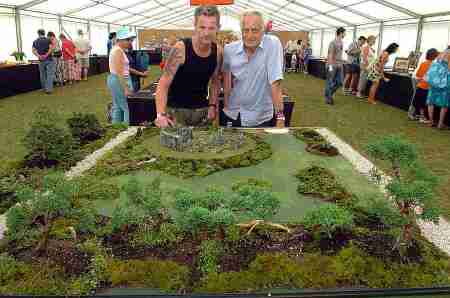
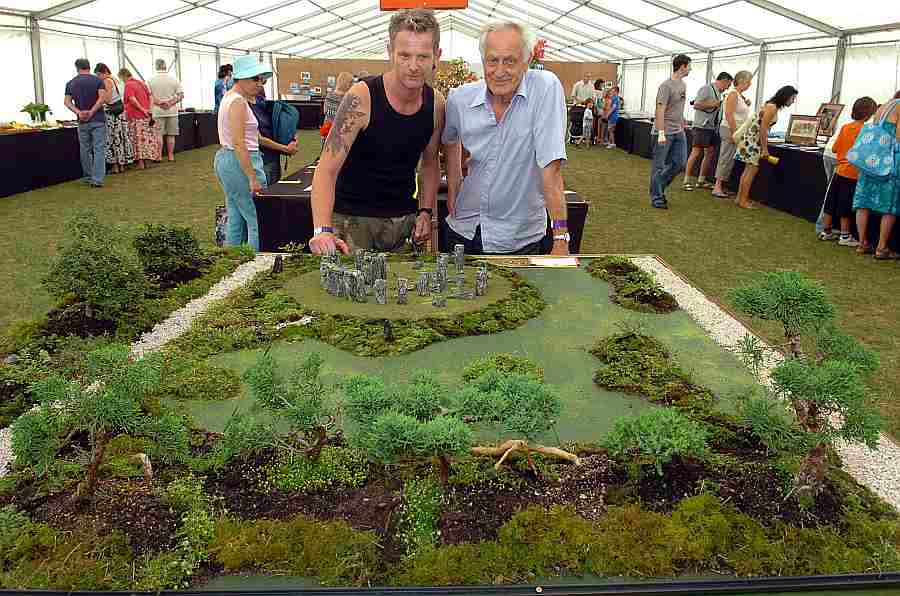
No one does a Stonehenge like the locals! Above we see bonsai hengers (wouldn’t Bonsai Hengers be a great name for a rock band?!) and gardener/artists Tony Oswin & Wilf Colston with their prize-winning creation at the Salisbury Community Show recently–a charming Stonehenge model landscaped with bonsai trees and a bit of whimsy.

We have to say this is one of the finest and prettiest Stonehenge models we have seen! True, the landscape around it is not true-to-life, but we see no reason English Heritage shouldn’t run out and make it so. It would cost a great deal less than not putting in the tunnel and not putting in the new visitor centre has cost them so far!

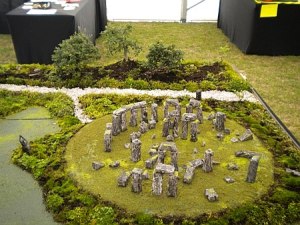
The photo above, used courtesy of the Salisbury Bonsai Society, to which the gentlemen belong, shows the thought that must have been put into the Stonehenge section of the display. The stones themselves were cast in molds to make blocks all the same size and then hand carved with a knife and painted. No buying a little Stonehenge kit and quickly standing the plastic pieces in a circle for these fellows!* Care has been taken to make the assemblage resemble the original. We’re impressed!

Score: 8 druids! (New readers–no we do not believe druids built Stonehenge. Our scoring is a bit of a joke.) That’s very good for a small model. Mr. Oswin and Mr. Colson now have Clonehenge score bragging rights. That and £3 will get you a cup of coffee at Starbucks. Unless prices have gone up!

We want to thank Matt Penny, aka @salisbury_matt , friend of the blog, Salisbury and Stonehenge enthusiast, and perpetrator of the Salisbury and Stonehenge website for spotting this Stonehenge replica and sending us a link. We count on you, alert readers! Here’s a deal: you keep sending us Stonehenge replicas and we’ll keep wasting your time with our drivel! We promise.

We wish someone would start a serious site about Stonehenge replicas so that lovely ones like this would get their due from a thoughtful writer. But alas, it’s just us out here, I’m afraid, and we’re deficient in the genes that make one serious. They’re lucky we don’t live closer or we might have slipped in some mini-druids like those that mysteriously appeared at Babbacombe Model Village in 2005.

Our next post will bring our list of large permanent replicas to 65, and it’s another British one, so stay tuned! Until then, gentle readers, happy henging!

*You know we love you, Two Green Thumbs Gardens! 😉

Alton Towers, Through the Eyes of a Coaster Nerd

photos by renowned intertube sorcerer Clinton Montague (we think he implied permission?!)

Remember the Alton Towers post? Of course you don’t. It’s clear from how often people send us henges we’ve already posted that no one goes back and looks at old posts. So be it. We prefer to pretend we have a faithful following that has read every post since the beginning, and remembers each one and what we said about it–so play along, people!

For a slow, arguably too detailed, account of the development of the Alton Towers property from Iron Age Fort to hunting lodge to grand estate to public gardens to amusement park you can have a look at the Wikipedia entry here. Or not. The relevant phrase is “A building known as Stonehenge”. Well put. It doesn’t say anything like “a building that looks like Stonehenge”. There is a reason for that, as you can see.

But since you, faithful reader, remember our discussion of that from the first post, no need to go over it again. The interesting point here is that these photos are brought to you by Alton Towers’ unique (we think?) position as a mecca for roller coaster enthusiasts and those who seek out Stonehenge replicas (if such people exist. Surely they do–every other kind of person does!).

Mr. Clinton Montague a.k.a. @iblamefish kindly took these pictures for us, at our request, on what was actually a trip to sample and blog about Alton Towers’ rides. Very kind. We encourage readers to visit replicas we’ve posted and send pictures so we can do what we’ve done here and milk each one for a second or even third post!

By the way, we want to thank another reader and member of the Clonehenge Facebook group, Basha Cohen, for mentioning and linking to Clonehenge in her article Wild and Wacky Stonehenge Replicas at OpenJourney.com. She calls us “the complete listing”. We like that, but must demur–we know there are more out there yet to be found and posted.

Until then, though, we’re still your last best hope. As @Rafael_RNAm tweeted in April, in Portuguese, “Se vc ñ tem o q fazer, faça uma réplica de Stonehenge. Se tem menos coisa ainda, faça um blog sobre as réplicas.” Translation: “If you have time on your hands, make a Stonehenge replica. If you have way too much time on your hands, make a blog about them.

Happy henging!

Stonehenge of Notre Dame, Indiana

photo by Michael Bohn, aka digitalbohn, used with permission

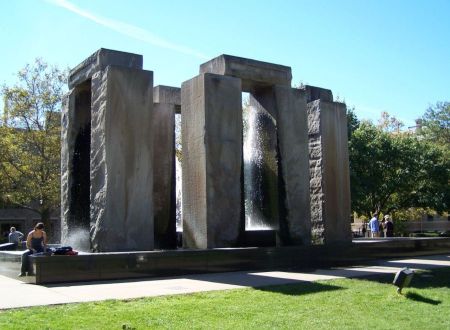
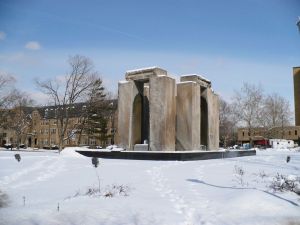
Okay, so how did this get by us for so long? Known variously as the Clarke Peace Memorial Fountain, Clarke Memorial Fountain, War Memorial Fountain and Notre Dame’s Stonehenge, this may be the only Stonehenge-referenced sculpture on the campus of a Roman Catholic university. It consists of four huge trilithons and five fountains, one for each trilithon and one rising from the sphere at the center of the monument. The taker of the photos toward the bottom of this post, a man we know only as John and by his Flickr name, Imazing, tells us, “This center fountain crashes down onto the sphere, creating a beautiful effect, especially during the night time when it is lit up.” You can see it here. Amazing photo!

The proportions of the trilithons echo the architecture of the Theodore M. Hesburgh Library which stands behind it, as you can see in the same picture.  As an interesting aside, another side of the library , seen on the left, displays a huge mural that depicts Jesus, the central figure in Christianity, teaching. Around Notre Dame, a school known for its American football team, this mural is affectionately known as Touchdown Jesus because his arms are in the position used by referees to signal a successful goal, or “touchdown” in American football.

On this page we find this paragraph about the fountain, “A survey published in a recent edition of The Dome revealed that 68 percent of Notre Dame’s senior class had run through the waters of Clarke Memorial Fountain at least one time. Certainly an even larger percentage has gravitated here to study, socialize, and even dance in the shadow of this campus landmark. Perhaps the lure of the fountain lies in the hauntingly timeless appeal of its mammoth form, which noted New York architects Philip Johnson and John Burgee (Notre Dame class of 1956) purposely designed to mimic the mystical, monolithic monuments built in Britain during the Bronze Age. Not surprisingly, its nickname is Stonehenge.

Okay, yes, as you point out, you pedant, surely they mean megalithic rather than monolithic here. But it does show that the sculptors did have Stonehenge in mind, not the case, we’re told, about the campus sculpture commonly called Stonehenge at the University of California at San Diego. We must say it does have a nice looming effect. We like it much more than the Rolla Stonehenge at the Missouri University of Science and Technology in Rolla, Missouri. That one is more functional, though, while this is just, well, art. There’s something very robotic about that Rolla unit.

We found this Stonehenge, by the way, while browsing the Stonehenge page of a website on Peace Monuments Around the World. Thanks to them for that and for linking to us! There is more information and many more pictures of this monument on the Historical Marker Database.

The monument at night, photo used by permission

As for score: 6½ druids, which is what we gave to Rolla. We’re pleased to be adding another campus Stonehenge, another Stonehenge fountain and another to our list of Large Permanent Replicas, all at once! Who knows what further henging delights may be lurking out there?

Hope you’re enjoying the summer, or winter if you’re in the–heh–lower hemisphere! 😉  Happy henging!

Third photo by Imazing, used with permission. Touchdown Jesus photo is in the public domain.

Cheesehenge, For the Sake of the Land!

photos from Laura Mousseau, used with permission

Well, after a long pause, which of course you know was caused by a freak double computer calamity because you follow us on Twitter, we are back with this excellent cheesehenge which you have of course already seen because it was our Friday foodhenge on Twitter back on March 5!

Laura Mousseau tells us, “Cheesehenge was created by Mark Stabb for a Nature Conservancy of Canada Ontario staff retreat (if you could link to the Nature Conservancy site for Ontario somehow it would be much appreciated!)” I suppose we could — [link]!. We’re, like, all in favour of the, you know, earth an’ s**t!

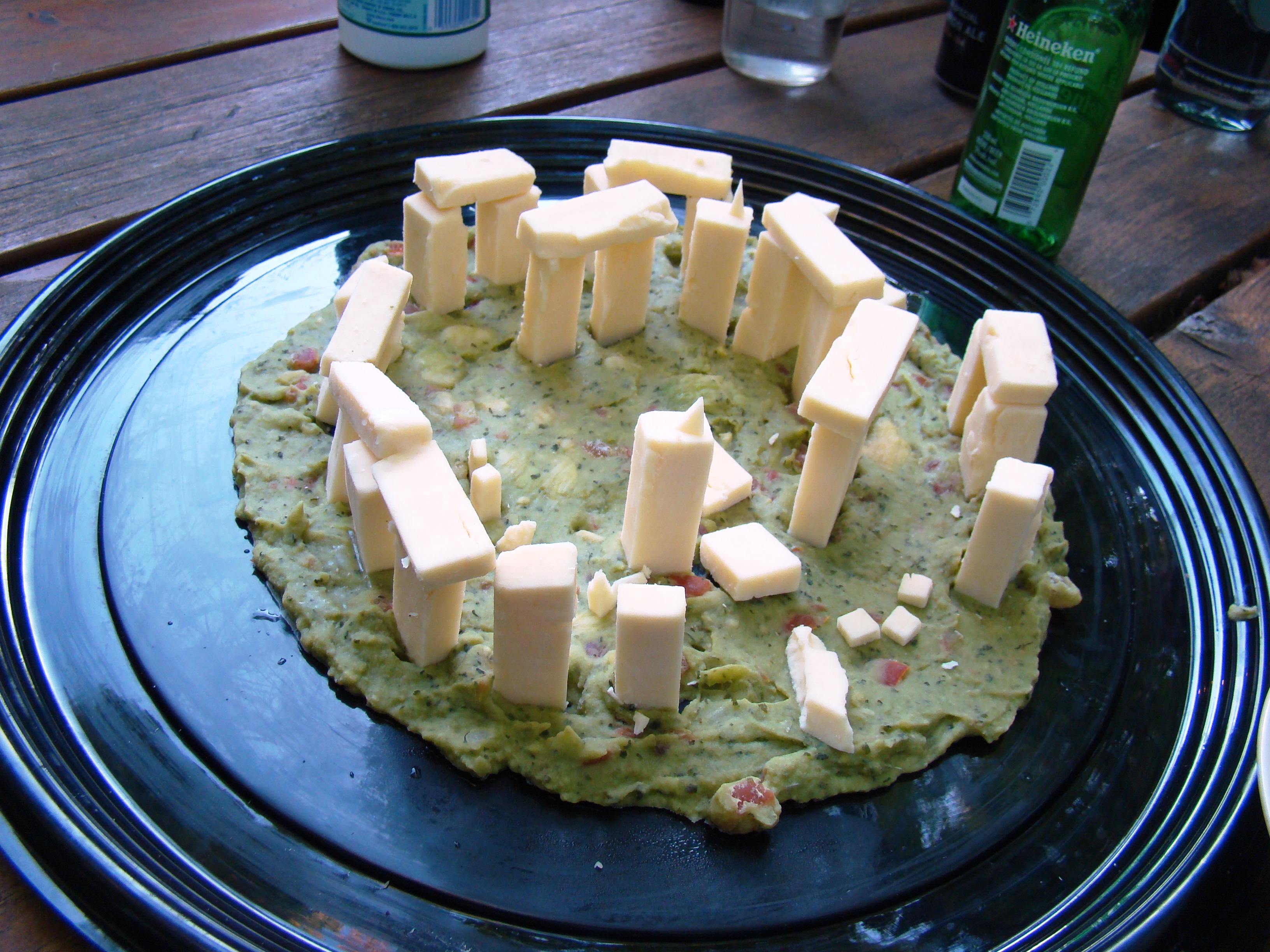
This is a particularly good cheesehenge. Observe tthe guacamole ground representing Salisbury Plain, inner trilithons that appear to be taller than the sarsens in the outer ring, and–la pièce de résistance–the careful placement of the inner trilithon horseshoe facing the the uprights with the three adjacent remaining lintels. Some observation definitely went into this, although we would not go so far as to say as someone does on the video (Oh, yes!) that it is archaeologically correct.

Cheesehenges, as we have said before, are among the commonest of henges, probably because cheese is capable of being cut into rectangular shapes and, of course, it is often served with alcoholic beverages, some of which appear to  have Stonehenge-generating properties. We have posted two cheesehenges before this. See here and here.

Score: 7 druids! If that seems high to you, you should know that we give extra consideration to treehuggers. It seems likely that the land was what it was all about back in the days of the original builders of Stonehenge, as well as over a millennium later in the days of the druids. Even today we all depend on it. Good to remember, people!

So kudos, Mr. Mark Stabb! Nicely done. The only problem here is all those people singing “dooooo” at the beginning of the video. Perhaps goofiness, in the end, is what makes the world go round. We sure hope so!

Until next time, whenever that is, happy henging!

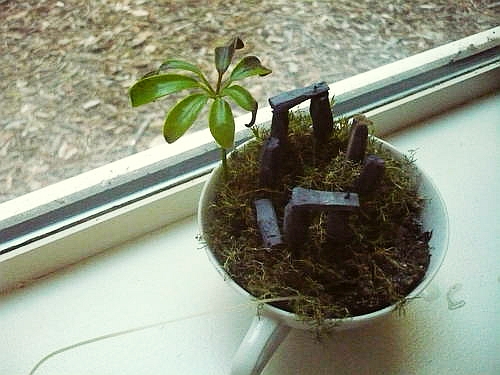
Stonehenge in a Teacup, England in a Nutshell!

photo and henging by Caitlan Vandewalle, used with permission

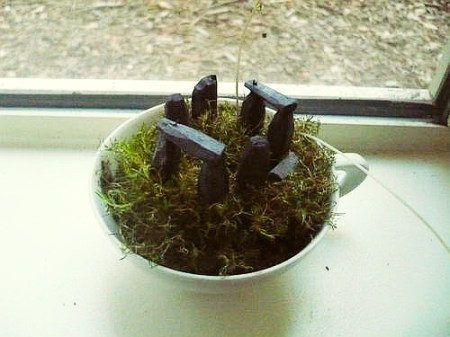
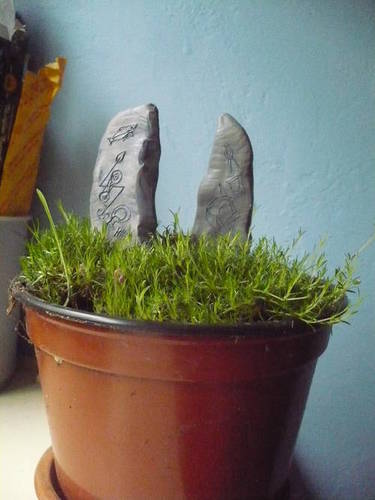
My boyfriend went to Scotland for a month and saw the Pictish stones, and I did a reproduction of these amazing ancient stones for him. While I was at it I made myself a stonehenge in a teacup.” That’s how Caitlan explains her venture into the rarified world of megalithic mini-gardening, or pseudo-megalithic mini-gardening, or maybe minilithic teacup gardening?

But we like this: “These actually are balsa wood. Sorry. They’re in a teacup to add a glaring element of Britishness, or as my boyfriend put it “you can’t reduce an entire culture to tea and Stonehenge!” to which I replied, ‘well I just did, so… maybe you can’t.’

Well done! What are the English besides Stonehenge and tea? Although as one commenter suggested, it would work best if there is a picture of the Queen on the teacup!

We were tickled to see that the whole thing was inspired by the Stonehenge mini-garden built (planted?) by the inimitable Janit Calvo of Two Green Thumbs Miniature Gardens, a friend of the blog. One Stonehenge replica inspires another. Stonehenge has perfected a unique and successful reproductive strategy seen nowhere else in nature, that of mind infection, and we see it at work here.

It seems by the comments that most Brits were not offended, but actually liked the visual shorthand here proposed for their culture. Still, just in case, Caitlan offers a salve: “(I know that’s not all there is to the UK!!! Feel free to make a washington monument obelisk in a mcdonald’s fries carton, it would serve me right.)” It just wouldn’t look as nice on the windowsill, though, would it? Making it even more accurate as a representation . . .

Score for the teacup henge: 6 druids. It’s only two trilithons and a few stones thrown in, but it has charm and, of course, moss. We liked it the moment we saw it. Maybe we’ll make one ourselves and save the plane fare. It’s exactly like being there!

The Pictish stones garden made for the boyfriend, also nicely done!

Fish Finger/Tater Tot Henge

photo from Emily Hunzicker, used with permission

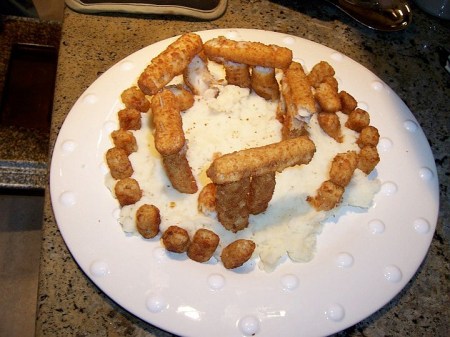
Yes, a foodhenge. We tweet foodhenge links on most Fridays, but haven’t been posting many here on the blog lately. We are about to remedy that, as we have at least three foodhenges lined up to post in the near future. First we’ll go for the greasy fried version, with sarsens of fish fingers (or fish sticks Stateside), and bluestones represented by tater tots (Is there a British term for these? Oven crunchies?). This foodhenge isn’t actually for eating, is it?

Emily Hunziker tells us the story of its origins:

Well, My family (Russ and Elisa Hunziker) and our friend (Lois Sisco) were thinking of some way to celebrate the summer solstice last year, and what better way to do so than with a henge! We figured fish sticks and tater tots were an appropriate size and shape to replicate a henge which we could eat for dinner afterwards. The sticks and tots are bedded in mash potatoes for support and not pictured was the Salisbury ‘plain’ Steaks which were the main course.

Regular readers will have guessed it–it is those Salisbury “Plain” steaks that truly won us over. Bad punz–we likes dem! And knowing that Stonehenge is on Salisbury Plain is a plus–after all, the people mentioned are in L.A.

We realise that an inner circle of four trilithons isn’t exactly right and it is odd to include the blue stones inside the outer circle and not those in the inner horseshoe. We’d have loved it if the mashed potatoes had been dyed green. But let’s have a look at a subtler good point–those Aubrey holes (-ish!) built in to the plate. Nicely chosen!

Emily dutifully passes this on: “My mother, who is quite opposed to eating such ‘cafeteria like’ foods, wanted me to mention the fact that, although they make excellent henge replicating material, tater tots, fish sticks, mash potatoes and steak gave us all heart burn.” Duly noted, Emily’s mom!

But the truly worrying part comes next. “Following dinner, there was a virgin (doll) sacrifice, in which a chocolate heart was cut from her chest and eaten to appease the gods.” Hmmm . . . sounds very Aztec to us, especially if the chocolate heart was still beating!

Yes, we know there is no proof that human sacrifice took place at Stonehenge. But we allow for a certain amount of playful poetic license on that matter, as with the PeepHenge we have linked to before (and which may soon have a post of its own because we love it so much!).

Score for this henge: 5½ druids! But this is not the end of Emily’s contributions. We shall hear from her again. The Hunzikers of Los Angeles seem to have a penchant for playing with their food–and we certainly approve!

So to all, we hope you had a lovely equinox celebration. Enjoy the long awaited Spring, and happy henging!

Share