Fostering Childhood Henge Addiction and Practicing the Craft(s)…

photos from firstpalette.com

As we know, not everyone is content to have Stonehenge an ocean or even a few miles away. The many ways of supplying your Stonehenge fix include virtual Stonehenges, large private Stonehenges, large public Stonehenges, pre-made fabricated mini-Stonehenges and then there are the homemade mini-Stonehenges. Where there is so great a need, teachers are bound to spring up. This one caters especially to the younger set of henge addicts, setting them up for a lifetime of henging!
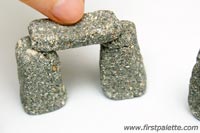
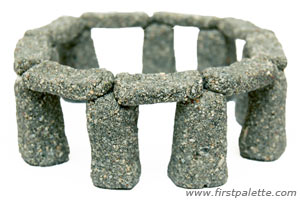
These instructions do several things right, enough so that we forgive them for calling it, “The Stonehenge.” First, they go into the whole lith, monolith, trilithon complex of words, thus reducing embarrassing spelling errors for those children who may grow up to the noble profession of Stonehenge replica blogging. We went for many posts before a friend pulled us aside and reminded us that it isn’t spelled trilothon. (Bright red-faced smiley and lawks!)

They also explain the lintels and there’s this nice little moment when their colouring the salt clay where they simply say, “Color your clay or dough by adding a bit of black acrylic paint or poster paint. Add a tinge of blue if you like.” (Our emphasis) They don’t mention bluestones, but that they throw that in, even though it’s for the sarsens, is nice. They also discuss the trilithon horseshoe at the bottom of the page, for the advanced neophyte henger. Not bad!
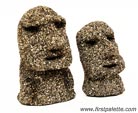
So we’re going along, showering them with adoring approval when what do we see? Say it ain’t so!! Yes, they are moai! Groan. Now many of our multitude of readers may have joined us too recently to remember, but the association of Stonehenge and moai is kind of a pet peeve of ours. True, in this case they are at least on separate pages, but this has opened old psychological wounds and we are now curled up in the fetal position dictating this to the cat!

Score: 6 druids! We like that it’s instructions for kids. Everyone should know several ways to create a Stonehenge in a pinch!

That’s it for now, so until next time, happy henging! AND SEND TUNA!!!!
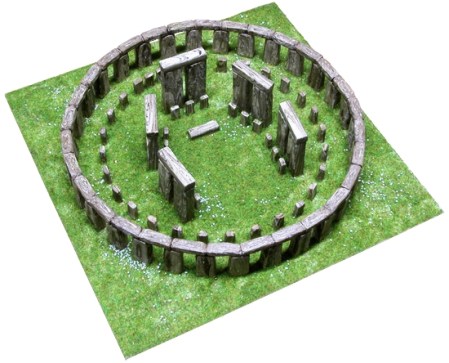
Aedes Ars, New Stonehenge Model for Sale, Made in Spain!

photo from the aedes ars website, used with permission.

We should have held out for a bribe! For the first time in our two-plus years of folly, a company contacted us in advance to announce the release of a new Stonehenge model. Did we maximise? Did we monetise? No. We’re just doing another post for free, losers that we are.

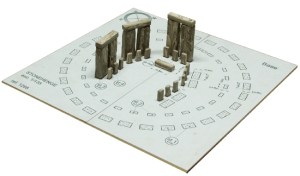
The kit’s dimensions are listed as 280 x 280 x 70 mm., about 11 inches square, for those who think in old units. Pretty small. All of the 121 pieces are fine quality ceramic fired at 800° C.
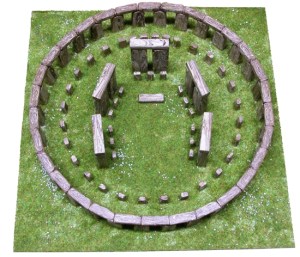
We’re told by the people at Spanish manufacturer aedes ars, “The main work with this kit (different of the rest of our products) is to scrape the surface of the pieces to make them irregular and to let the clay colour mix appear in the surface.” So they’re going to some trouble to make the stones look suitably old and stony, always a good sign. They haven’t quite got their English right, but we don’t score on that. Our Spanish isn’t that great, either, a decir la verdad.

What we don’t know yet is how much it’s going to cost, but the company seems very proud of this Stonehenge model, as it is pictured on the cover of their latest catalogue. So, how shall we evaluate it? Our only other commercial clay Stonehenges, the models by Hawkes Nest in North Olmstead, Ohio, got 7 druids, but this one is a little finer, with better-shaped stones and a more professional look. Still, the Hawkes Nest models had a nice wood base…

We like sets you assemble yourself, though. Makes it easier to use for history class dioramas, etc. While the set is of the Stonehenge-as-it-is-imagined-to-have-looked-at-first variety, you could make a good stab at setting it up as it is now. That’s a plus! We like the current, disheveled look of the grey monster of Salisbury Plain better, all in all.
Score? We give it 8 druids. Nice set. Things that future model-makers can do better: 1) shape stones individually to match each real stone at Stonehenge, as they did in the exquisite cardboard Stonehenge, 2) include a larger baseboard with room for Aubrey holes and a heelstone, and more space so it doesn’t look so cramped, and 3) draw stone positions for the current state of the monument on the reverse side of the base material.

Now, for those thinking of contacting us with commercially available Stonehenges in like manner in the future: we figure we should get about €2000 per druid scored!  Or, you could just ask us politely like they did and we’ll probably do it for free. This is our mission: to demonstrate to the world the incredible rate at which Stonehenge is reproducing itself like a virus, using human minds as cells to incubate and create its young and thus to take over the world!!!1!

We don’t have to be paid to sing our siren of warning into the vastnesses of cyberspace. We just hope for a monument to be built to us after mankind realises the fate we’ve saved it from. We’re thinking of a nice linteled stone monument, about 33 meters across, surrounded by a circular earthwork…

Bonsai Stonehenge–Yes, It’s Salisbury But It Isn’t Plain!

photo courtesy of Salisbury Newspapers www.journalphotos.co.uk

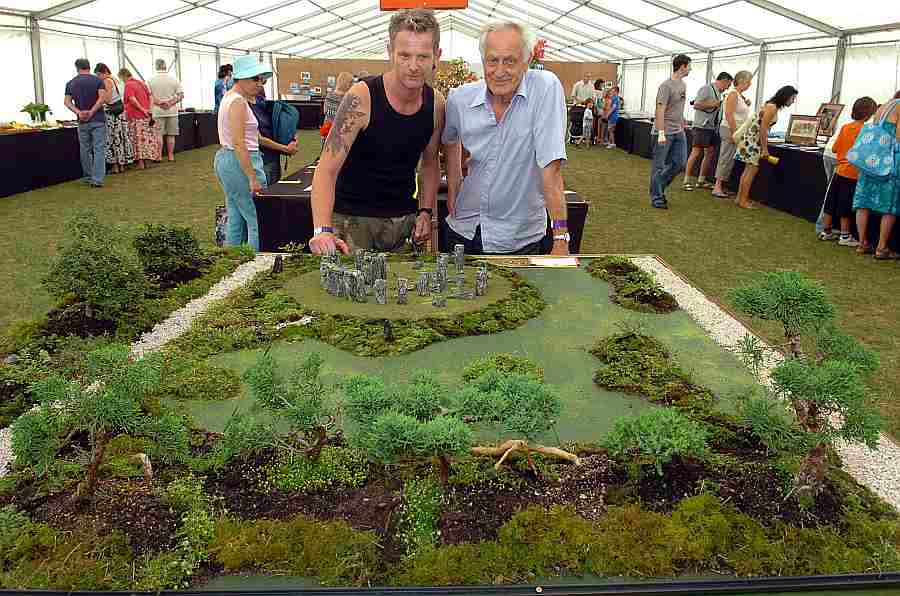
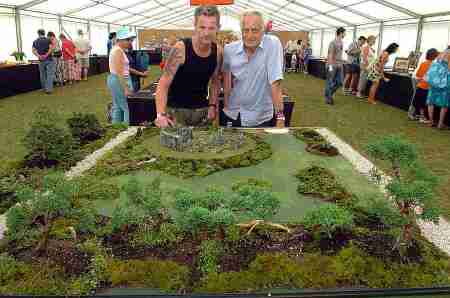
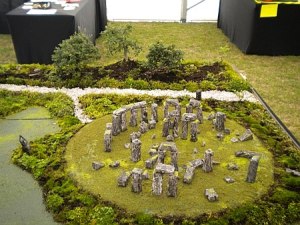
No one does a Stonehenge like the locals! Above we see bonsai hengers (wouldn’t Bonsai Hengers be a great name for a rock band?!) and gardener/artists Tony Oswin & Wilf Colston with their prize-winning creation at the Salisbury Community Show recently–a charming Stonehenge model landscaped with bonsai trees and a bit of whimsy.

We have to say this is one of the finest and prettiest Stonehenge models we have seen! True, the landscape around it is not true-to-life, but we see no reason English Heritage shouldn’t run out and make it so. It would cost a great deal less than not putting in the tunnel and not putting in the new visitor centre has cost them so far!

The photo above, used courtesy of the Salisbury Bonsai Society, to which the gentlemen belong, shows the thought that must have been put into the Stonehenge section of the display. The stones themselves were cast in molds to make blocks all the same size and then hand carved with a knife and painted. No buying a little Stonehenge kit and quickly standing the plastic pieces in a circle for these fellows!* Care has been taken to make the assemblage resemble the original. We’re impressed!

Score: 8 druids! (New readers–no we do not believe druids built Stonehenge. Our scoring is a bit of a joke.) That’s very good for a small model. Mr. Oswin and Mr. Colson now have Clonehenge score bragging rights. That and £3 will get you a cup of coffee at Starbucks. Unless prices have gone up!

We want to thank Matt Penny, aka @salisbury_matt , friend of the blog, Salisbury and Stonehenge enthusiast, and perpetrator of the Salisbury and Stonehenge website for spotting this Stonehenge replica and sending us a link. We count on you, alert readers! Here’s a deal: you keep sending us Stonehenge replicas and we’ll keep wasting your time with our drivel! We promise.

We wish someone would start a serious site about Stonehenge replicas so that lovely ones like this would get their due from a thoughtful writer. But alas, it’s just us out here, I’m afraid, and we’re deficient in the genes that make one serious. They’re lucky we don’t live closer or we might have slipped in some mini-druids like those that mysteriously appeared at Babbacombe Model Village in 2005.

Our next post will bring our list of large permanent replicas to 65, and it’s another British one, so stay tuned! Until then, gentle readers, happy henging!

*You know we love you, Two Green Thumbs Gardens! 😉

Clonehenge Field Trip to—Cleveland?!

Our own photos

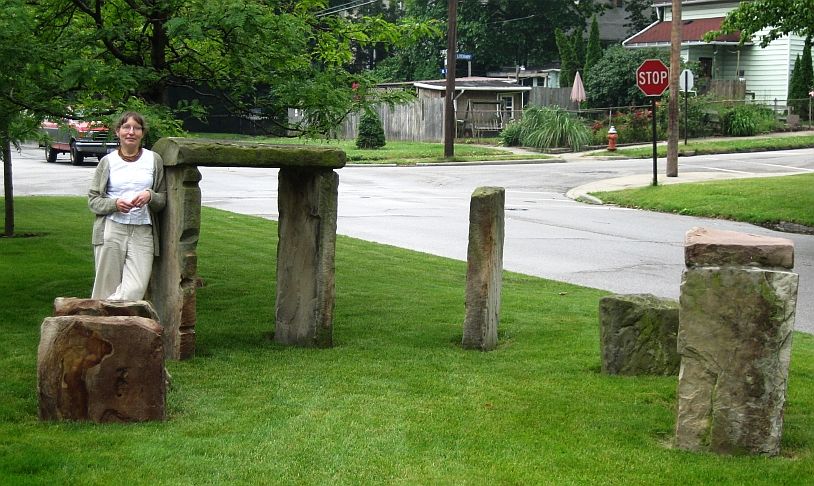
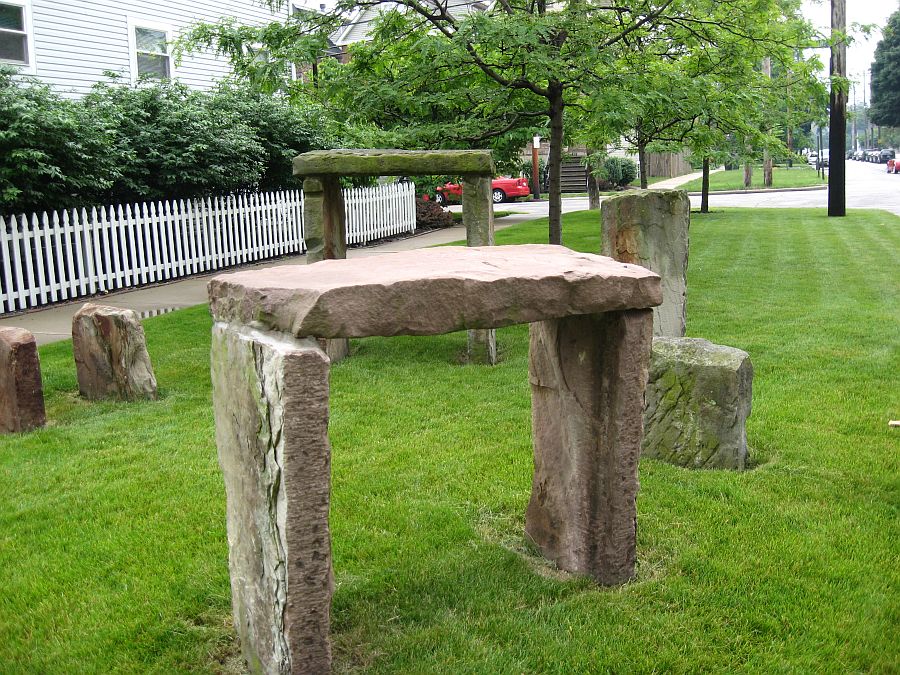
We took a holiday to Ohio to visit–ahem–a close relative, and while there we took a detour to the Tremont section of Cleveland to eat at the mildly famous Lucky’s Cafe. The youngest member of our party was carrying an iPhone and we asked him to bring up our post on Tremont Henge. He did, then found another photo of it, from which he was able to determine a nearby intersection, then in a moment we were looking at an aerial view on a map site. Technology is powerful. And maybe that cafe is lucky!

When we finished our meal, we walked the few blocks to the intersection, and there it was! Tremont Henge, just like in the pictures. Of course Yours Truly had to pose for a picture.

We were tempted to knock on the door to see if we could meet the hengers and learn their motivations, but hard as it may be to believe, Clonehenge is not yet a household word. We didn’t want to make them feel their henge was going to be a source of hassles and interruptions, and risk causing them to dismantle it. So we let them be.

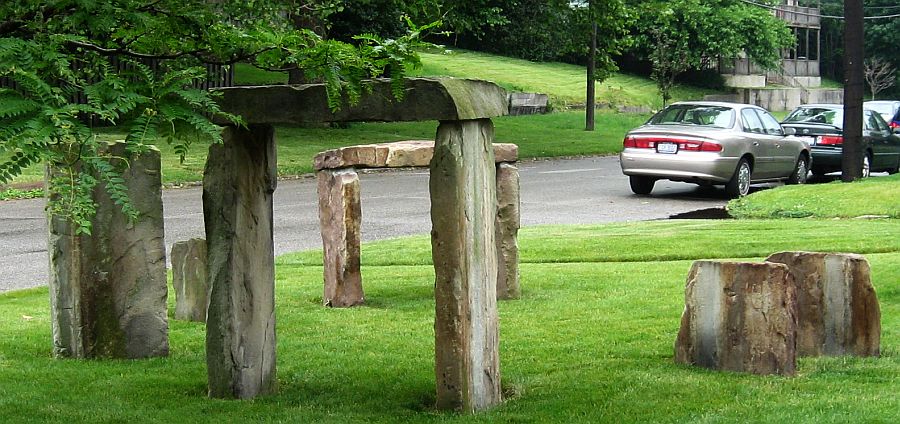
It’s a nice little hengy lawn piece. Despite its lack of heft, it has a solid megalithic feel. It’s an easy henge to like.

Readers, if you know of any other little henges like this, please send them in! Well, not the whole henge, of course, just pictures and as much information as you can get.  And Tremont hengers, if you’re out there, we would love to hear your story!

We walked around Tremont and were impressed with its funky, fun atmosphere. We could enjoy living there. Of course it could  use more henges! But that goes without saying. Parts of Cleveland clearly do rock!

Our thanks to @jwisser for his guidance to the site and to @hombredepan for taking my picture, chauffeur service and the meal!

Hmmm . . . what henge is next?

Note: You can also see Tremont Henge on Google Street View, here.

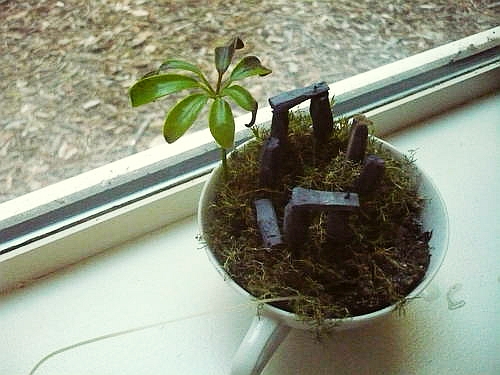
Stonehenge in a Teacup, England in a Nutshell!

photo and henging by Caitlan Vandewalle, used with permission

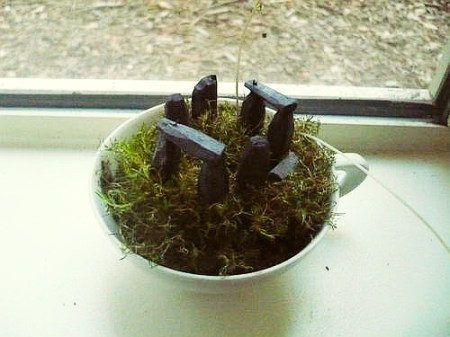
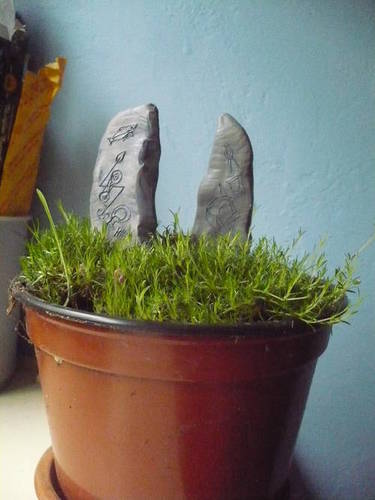
My boyfriend went to Scotland for a month and saw the Pictish stones, and I did a reproduction of these amazing ancient stones for him. While I was at it I made myself a stonehenge in a teacup.” That’s how Caitlan explains her venture into the rarified world of megalithic mini-gardening, or pseudo-megalithic mini-gardening, or maybe minilithic teacup gardening?

But we like this: “These actually are balsa wood. Sorry. They’re in a teacup to add a glaring element of Britishness, or as my boyfriend put it “you can’t reduce an entire culture to tea and Stonehenge!” to which I replied, ‘well I just did, so… maybe you can’t.’

Well done! What are the English besides Stonehenge and tea? Although as one commenter suggested, it would work best if there is a picture of the Queen on the teacup!

We were tickled to see that the whole thing was inspired by the Stonehenge mini-garden built (planted?) by the inimitable Janit Calvo of Two Green Thumbs Miniature Gardens, a friend of the blog. One Stonehenge replica inspires another. Stonehenge has perfected a unique and successful reproductive strategy seen nowhere else in nature, that of mind infection, and we see it at work here.

It seems by the comments that most Brits were not offended, but actually liked the visual shorthand here proposed for their culture. Still, just in case, Caitlan offers a salve: “(I know that’s not all there is to the UK!!! Feel free to make a washington monument obelisk in a mcdonald’s fries carton, it would serve me right.)” It just wouldn’t look as nice on the windowsill, though, would it? Making it even more accurate as a representation . . .

Score for the teacup henge: 6 druids. It’s only two trilithons and a few stones thrown in, but it has charm and, of course, moss. We liked it the moment we saw it. Maybe we’ll make one ourselves and save the plane fare. It’s exactly like being there!

The Pictish stones garden made for the boyfriend, also nicely done!

Fish Finger/Tater Tot Henge

photo from Emily Hunzicker, used with permission
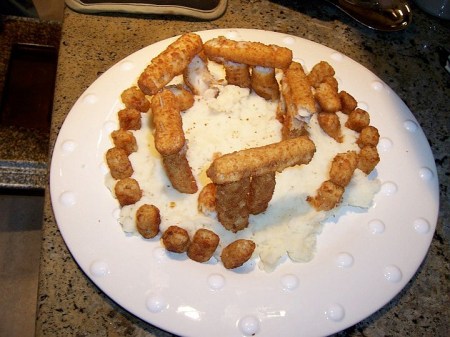
Yes, a foodhenge. We tweet foodhenge links on most Fridays, but haven’t been posting many here on the blog lately. We are about to remedy that, as we have at least three foodhenges lined up to post in the near future. First we’ll go for the greasy fried version, with sarsens of fish fingers (or fish sticks Stateside), and bluestones represented by tater tots (Is there a British term for these? Oven crunchies?). This foodhenge isn’t actually for eating, is it?

Emily Hunziker tells us the story of its origins:

Well, My family (Russ and Elisa Hunziker) and our friend (Lois Sisco) were thinking of some way to celebrate the summer solstice last year, and what better way to do so than with a henge! We figured fish sticks and tater tots were an appropriate size and shape to replicate a henge which we could eat for dinner afterwards. The sticks and tots are bedded in mash potatoes for support and not pictured was the Salisbury ‘plain’ Steaks which were the main course.

Regular readers will have guessed it–it is those Salisbury “Plain” steaks that truly won us over. Bad punz–we likes dem! And knowing that Stonehenge is on Salisbury Plain is a plus–after all, the people mentioned are in L.A.

We realise that an inner circle of four trilithons isn’t exactly right and it is odd to include the blue stones inside the outer circle and not those in the inner horseshoe. We’d have loved it if the mashed potatoes had been dyed green. But let’s have a look at a subtler good point–those Aubrey holes (-ish!) built in to the plate. Nicely chosen!

Emily dutifully passes this on: “My mother, who is quite opposed to eating such ‘cafeteria like’ foods, wanted me to mention the fact that, although they make excellent henge replicating material, tater tots, fish sticks, mash potatoes and steak gave us all heart burn.” Duly noted, Emily’s mom!

But the truly worrying part comes next. “Following dinner, there was a virgin (doll) sacrifice, in which a chocolate heart was cut from her chest and eaten to appease the gods.” Hmmm . . . sounds very Aztec to us, especially if the chocolate heart was still beating!

Yes, we know there is no proof that human sacrifice took place at Stonehenge. But we allow for a certain amount of playful poetic license on that matter, as with the PeepHenge we have linked to before (and which may soon have a post of its own because we love it so much!).

Score for this henge: 5½ druids! But this is not the end of Emily’s contributions. We shall hear from her again. The Hunzikers of Los Angeles seem to have a penchant for playing with their food–and we certainly approve!

So to all, we hope you had a lovely equinox celebration. Enjoy the long awaited Spring, and happy henging!

Share

Building Stonehenge at Stonehenge, A Trilithon Model

photos are stills from Pete Glastonbury’s Youtube clip, used with permission

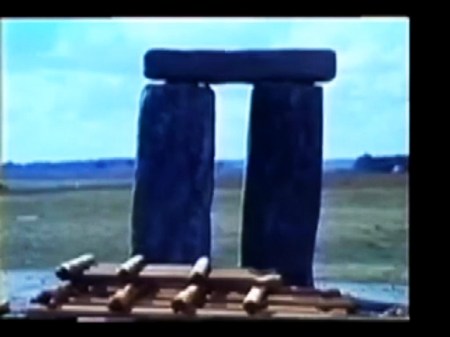
Here is one for the record books. Only once before, during the first month Clonehenge existed, did we post a replica that was actually at Stonehenge (Straw echo henge–wow,our posts were short back then!) Here is another one, this time, in keeping with our film and movie theme of late, from a CBS TV special made in 1964 called (like so many other things) The Mystery of Stonehenge.

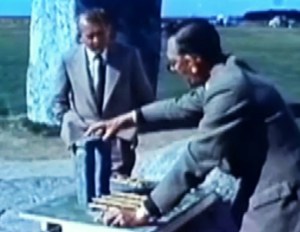
It happens that a contributor to that TV special, Gerald Hawkins, author of the well-known book Stonehenge Decoded (one of those books that has been on our shelves for so long that we couldn’t say when we bought it!), was an acquaintance of our friend and frequent contributor Mr. Pete Glastonbury. Mr. Glastonbury uncovered a copy of the film in Mr. Hawkins’ archives and sent us the link to this delightful bit at Stonehenge in which Professor Richard Atkinson explains to a CBS reporter how he thinks the monument was built, putting a trilithon replica together in the process. (In the smaller photo here you can see a real sarsen upright in the background.)

What can we say? For the Stonehenge replica nerd, this is about as good as it gets–a renowned Stonehenge scholar putting together a Stonehenge replica at Stonehenge–on film. Score: 7½ druids! It’s great, true, but that’s as high as we can go for what is only a miniature trilithon.

This probably won’t be the last of these old-ish films. We’ve read that Hawkins was filmed explaining his theories using a plastic Stonehenge model and some lighting to simulate the sun shining into the monument at different times of year. If we can find it, we’ll post that, too.

Meanwhile, if all this academia is making you homesick for good old Spinal Tap, here is our post on that. We don’t want to stay too serious about Stonehenge replicas, dudes and dudettes. They are inherently silly things.

Happy henging!

Note added later: Oddly, completely by coincidence, Stonehenge Collectables’ latest addition to their site is a press release and TV Guide listing about a rerun of this CBS special in 1973. You can see it here.

Share

Henge for a Chameleon–1946, Somewhere in a London Zoo

copyrighted photo used with © on it. Click photo to visit page.

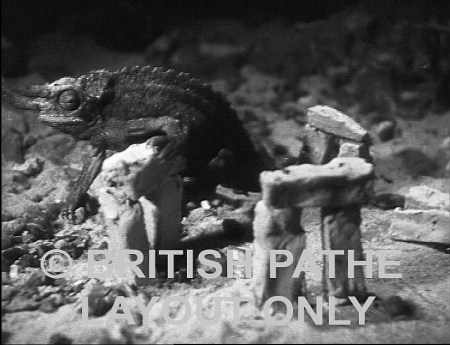
This is brilliant! British Pathé, a digital news archive, includes a video of chameleons climbing over a small Stonehenge replica at the London Zoo, like huge bizarre creatures of a past age. Brought to our attention by the magnificent yet under-appreciated Pete Glastonbury (unfairly gifted photographer whose speciality is ancient sites), this is probably the oldest existing video of a small Stonehenge replica.

Click >here< to see the British Pathé page, Prehistoric 1946, with video. (Totally worth clicking on just to hear the stentorian 1946 announcer and the ever-so-clever attempt at a humourous ending! ) The text on the page says, “Several shots of a chameleon moving around model of Stonehenge in a London Zoo. Some good close up shots of chameleons. This animal is half brother to lizard and looks like one. Man organises chameleons with hands – probably a zoo keeper.

The replica is just four trilithons, but there it is, a bit of Stonehenge replica history. No scoring for this. It’s too awesome, too sexy for its trilithons! Please, if you have any old photos or videos of Stonehenge replicas, we want–no–we need to see them!

[This reminds us of the Stonehenge for Lizards post. Hmmm, there’s also the Stonehenge at the reptile zoo and the chocolate replica with the plastic lizards. We detect a pattern!. David Icke, where are you when we need you?! 😉 ]

Note: For those who don’t know, subscribers to our Twitter feed get links to extra henges from time to time, including our Friday foodhenges. In case you’re interested. Anyway, have a great weekend. Happy henging!

Share

HengeClub, a Blog

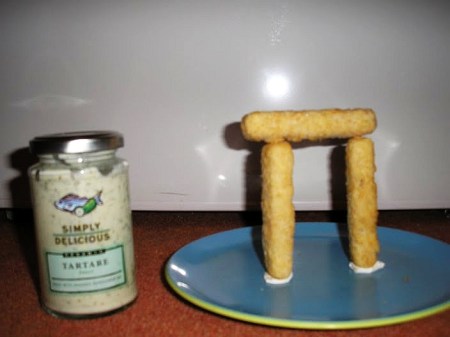
the elusive fishfingerhenge or fish stick henge, photo and henge by Anne Jensen, used by permission of the HengeClub blog

If you’re interested in henges you may have run across it already–the blog of homemade henges, HengeClub. Started just this past August, it is made up of posts of photos people send in, of henges they’ve made or (and we like this because we’ve toyed with the idea many times) found henges.

They include henges made out of many pleasingly unsuitable materials, just the sort of things we approve of, including the fish fingers or fish sticks above–now we have thought for a while that those were great henging materials but we’d never found one until we saw it on HengeClub. Thank you, everyone over there!

Most of the henges on HengeClub are rudimentary, not much more than single trilithons, but the sheer number of entries and variety of materials make it worth a visit. We admit we’re a little disappointed to find we’ve never been mentioned. After all, working together perhaps we could raise world awareness of the henge phenomenon!

(Chocolatecoinhenge by Sundaeg1rl)

The existence of that blog, like the popularity of a WebUrbanist post on Stonehenge replicas (most of which WU almost certainly saw first on Clonehenge!) demonstrates that these replicas have become one of those odd little corners of our culture that people keep coming back to. We’re always glad to see more interest in the topic!

Okay, we admit to a little envy–we’ve been asking people to make henges and send them in since November 2008, and we’ve received barely more than a handful. But then our primary draw is our list of large permanent replicas. And our incredulous musings about what strange force impels people to build henges and just how many of these linteled constructions there are and have been! HengeClub is another bit of proof that something very peculiar is going on.

Curiouser and curiouser!

A Little Stonehenge, a Cucumber, and Eleven

photos by Somara aka snarkygurl, with permission

[Strictly speaking this is not a Stonehenge replica, but a replica of a Stonehenge replica. The rare clonehenge clone!]

What a movie! What a cake! The movie This Is Spinäl Tap made the Stonehenge replica a household idea. We’ve often wondered what percentage of the 250 and counting posts we’ve put up would be here if it weren’t for Spinal Tap. Well, there is no doubt about today’s entry!

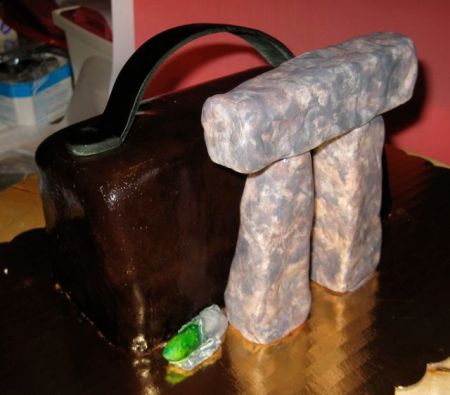
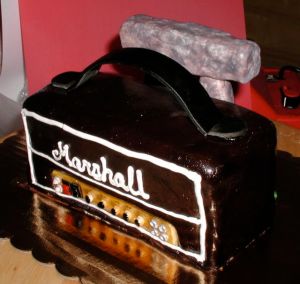
The baker/artist and photographer writes: “A friend of ours wanted to surprise her husband with a Spinal Tap cake for his birthday. She didn’t care what it looked like, so I had free reign to do what I wanted. I like it, other than the part where I accidentally made the strap too long, and where I lost the wrestling match with the white frosting.

Well, we think she did an excellent job. Even got that cucumber-wrapped-in-tinfoil in there although much reduced in size!

And, speaking of reduced in size, our focus is, of course, the little Stonehenge replica, a trilithon, actually. We like the way the colouring on it is marbled to make it look like stone. It is very nicely done. Plus, it looks delicious. We hope it was.

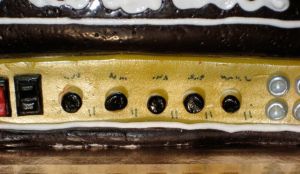
Please note that the dials on the amp do say 11. That’s one higher! By the way, you can see our other posts concerning Spinal Tap here and here.

Score: 5 druids. It’s not much smaller than the one in the movie, after all. And we’re guessing Somara had a lot less money to work with. It’s not easy to get this kind of likeness in an edible replica. Nicely done!

Share